The Yellow Dust: How HEPA Filtration Protects Asheboro Families
In Asheboro, the arrival of spring is marked by a thick layer of yellow pine pollen covering every car and porch. While this "yellow dust" is a visible nuisance outside, the real concern is the microscopic particles that make their way into your home's ductwork. Your HVAC system is your primary defense against these seasonal allergens, but a standard 1-inch pleated filter is often insufficient for true relief. Upgrading your filtration strategy is the most effective way to maintain healthy indoor air quality during the peak of the North Carolina pollen season.
By Jordan Heating and Air
Serving Central North Carolina Since 1928
TL;DR ESTIMATED READING TIME: 2 MIN
This educational guide explains the role of HEPA filtration in capturing North Carolina's heavy seasonal pollen. It applies to any homeowner in the Piedmont Triad struggling with spring allergies. You should consider upgrading to a high-MERV or HEPA-equivalent filter and scheduling a system cleaning to prevent pollen from circulating through your vents.
Understanding the "Yellow Dust" Barrier
Standard fiberglass filters are designed to protect the equipment from large dust bunnies, not to protect your lungs from microscopic pollen spores. To truly scrub the air, you need to explore advanced IAQ Solutions that integrate directly with your air handler. A HEPA (High-Efficiency Particulate Air) filter can trap 99.97 percent of particles as small as 0.3 microns. This includes the fine particulates that break off from larger pollen grains. When your system pulls air through these dense fibers, it acts as a whole-home purifier, ensuring that the air you breathe in your bedroom is significantly cleaner than the air on your front porch.
The Physics of Pollen Capture
- Interception: Pollen particles following the airstream come within one radius of a filter fiber and adhere to it.
- Impaction: Larger particles cannot adjust to the quick changes in airflow around fibers and embed themselves directly into the mesh.
- Static Charge: Many modern high-efficiency filters use an electrostatic charge to pull particles out of the air like a magnet.
- Duct Integrity: Even the best filter is bypassed if you have leaks in your return ducts; sealing these gaps is a critical part of Maintenance.
IAQ Readiness Audit
| System Factor | Your Current Situation | What That Usually Means |
|---|---|---|
| Filter MERV Rating | MERV 1-4 (Basic fiberglass) | Captures less than 20 percent of large pollen particles |
| Dust on Vents | Visible yellow or gray buildup | Pollen and dander are bypassing the filter and accumulating in ducts |
| Family Allergies | Frequent sneezing only when indoors | Your HVAC system is likely circulating high concentrations of allergens |
Balancing Filtration and Airflow
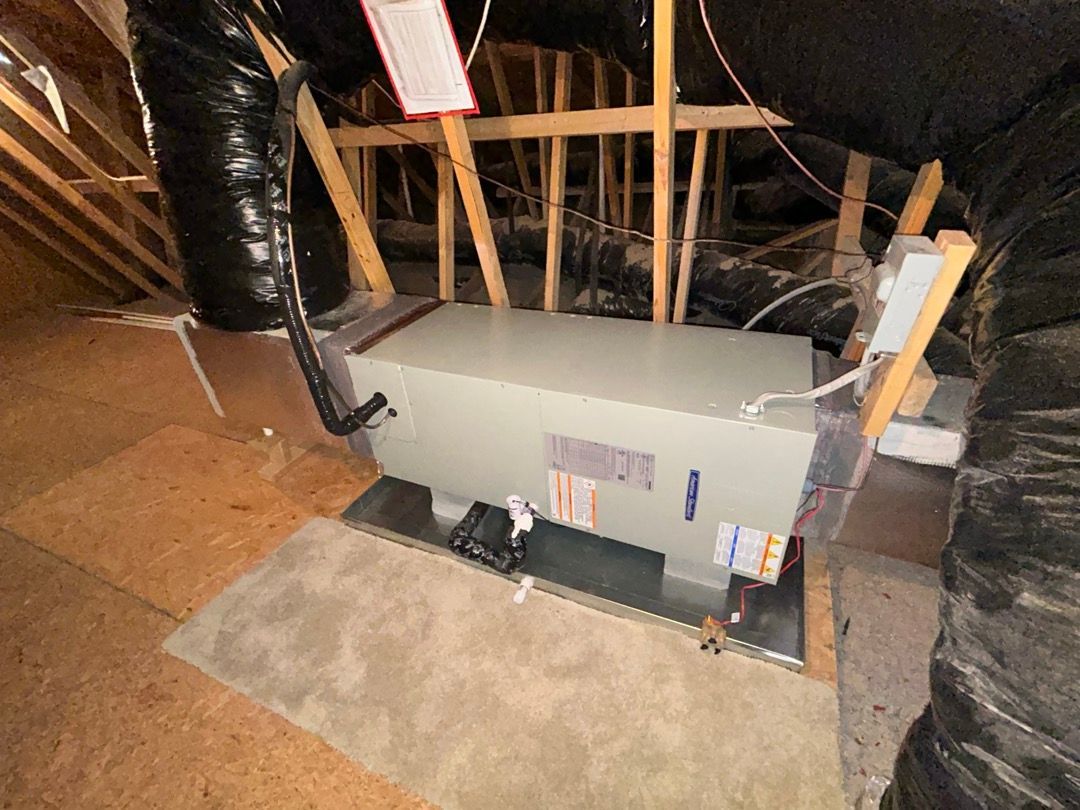
There is a common misconception that simply buying the thickest filter possible is always better. However, high-density filters create "static pressure" or resistance. If your blower motor isn't designed to push air through a thick HEPA-grade filter, the system can overheat or freeze up. This is why we perform a static pressure test before recommending an upgrade. We often install a media cabinet that accommodates a 4-inch or 5-inch deep-pleated filter. These provide massive surface area for pollen capture without suffocating your air conditioner. This setup allows for maximum filtration efficiency while maintaining the high airflow necessary to keep your Asheboro home cool during the humid transition into summer.
Frequently Asked Questions
Can I just buy a HEPA filter at a big-box store?
Most "HEPA" filters sold in retail stores are too restrictive for standard residential HVAC blowers without professional modification. Using a filter that is too dense can damage your compressor or blower motor. I recommend a MERV 11 or 13 filter as a safe, high-efficiency alternative for most North Carolina homes.
How does pollen get into my HVAC system?
Pollen enters through open doors, windows, and even the tiny gaps around your home’s envelope. Once inside, the HVAC return vent pulls the air—and the pollen—into the system. Without a high-quality filter, those particles are simply redistributed into every room of the house.
Will a better filter help with the smell of "Dirty Sock Syndrome"?
While a high-efficiency filter captures the spores that lead to microbial growth, it cannot remove an existing odor from the coils. To eliminate smells, the coils must be chemically cleaned, and then a high-MERV filter should be used to prevent future organic matter from feeding new bacteria.
You don't have to suffer through the yellow dust season. Protecting your family's health starts with the air they breathe every day. I'm ready to help you find the right balance of filtration and performance for your specific system.
Sincerely,
Jordan Heating and Air Conditioning
Committed to Honesty & Quality