HVAC Efficiency: Cleaning Your Outdoor Unit in Asheboro
The Green Sweater: How Mid-Summer Yard Debris Suffocates AC Efficiency
By Jordan Heating and Air | Serving Central North Carolina Since 1928
SUBJECT: Condenser Airflow Metrics, Head Pressure Elevation & Thermal Exhaust Clearing
LOG DATE: 2026-07-27
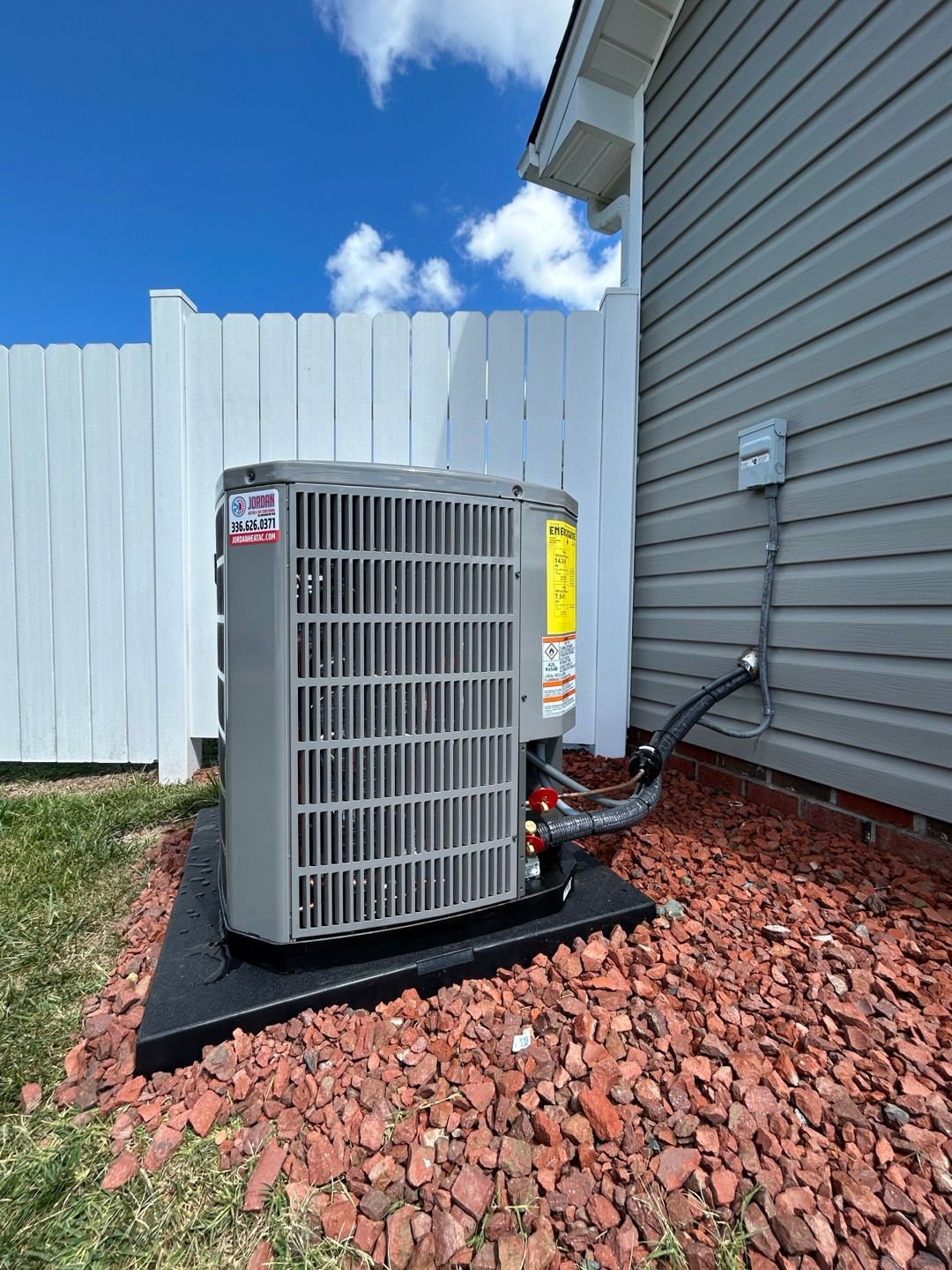
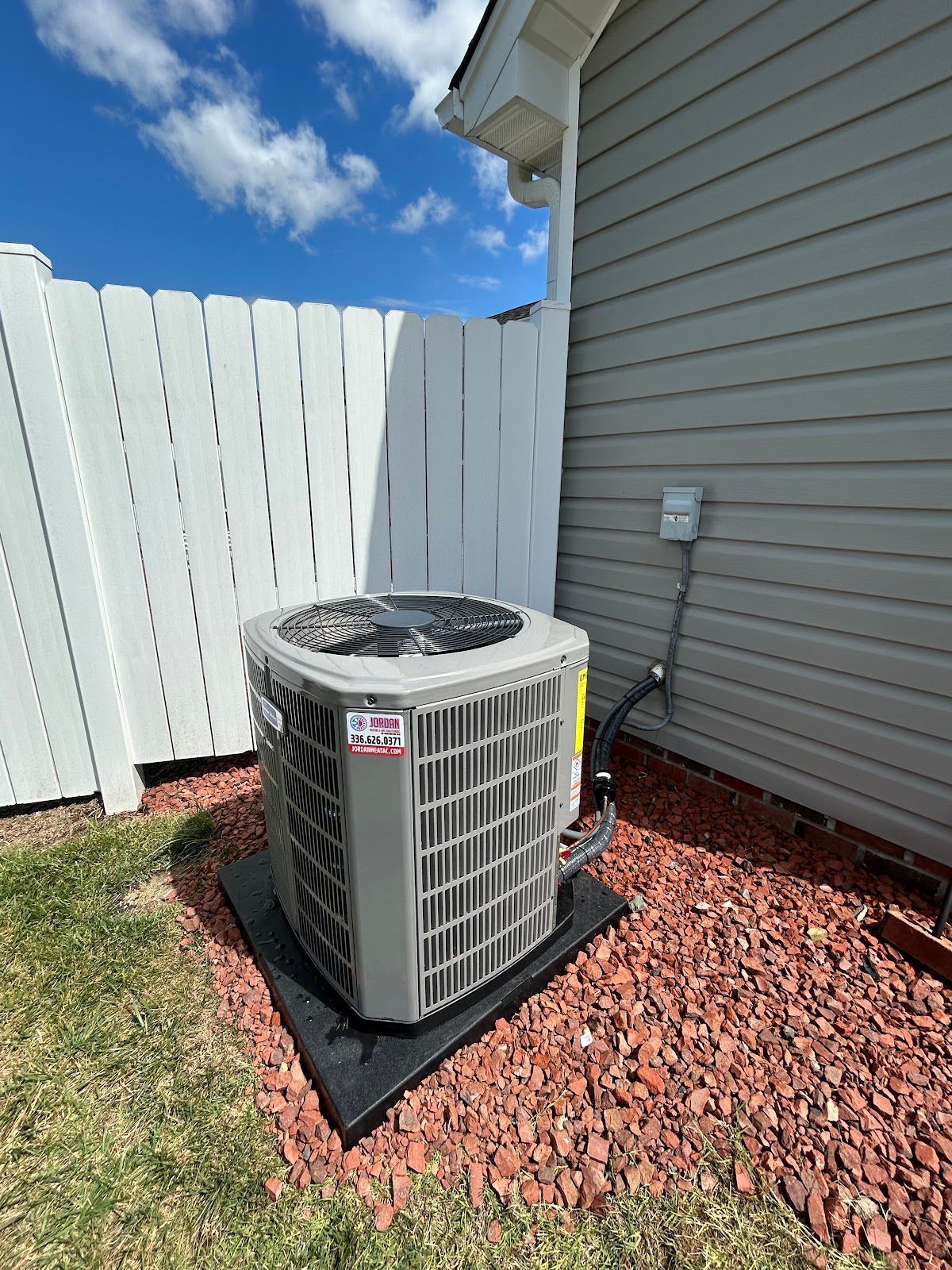
Your outdoor AC unit is a high-volume thermal exhaust port, not a passive piece of metal equipment. When lawnmowers shoot wet grass clippings and weeds into those delicate aluminum fins, it creates an insulating barrier that can ruin your system's compressor.
Choked condenser coils raise system operating pressures, driving up energy bills and running the risk of unexpected breakdown. Maintaining a clear space around your outdoor machinery ensures uninhibited heat dumping and stable voltage metrics. Review our comprehensive preventative Maintenance Plans to keep your cooling loops operating flawlessly, or learn how we optimize regional HVAC Efficiency scores.
The Fluid Dynamics of Heat Dissipation
Your central cooling cycle relies entirely on your outdoor unit's ability to reject heat. High-temperature gas refrigerant is pumped outside into the winding copper tubes of your condenser coil assembly. As the massive fan blade spins, it must draw up to 3,000 Cubic Feet per Minute ($CFM$) of ambient air through the aluminum fins to pull heat out of the gas line, turning it back into a liquid loop. However, because the fan creates strong suction, it acts like a giant vacuum cleaner for your yard. Wet grass clippings from mowing, blowing dandelion seeds, and local clay dust are pulled flat against the metal fins. Over weeks of steady operation, this debris forms a dense crust that completely cuts off systemic breathing. Without free air exchange, the refrigerant cannot dump its thermal load, destroying your cooling output and driving up energy costs.
3 Field Rules for Maintaining Your Outdoor Perimeter
- Maintain a 24-Inch Boundary: Clear away thick weeds, low-hanging shrubbery, and stored landscaping supplies within two feet of your unit to ensure the fan can pull air cleanly from all angles.
- Deflect Your Mower Discharge: When cutting turf adjacent to your cooling unit, always point your mower's side chute away from the equipment cabinet to keep wet grass from plastering the fins.
- Eliminate Vertical Overhangs: Trim back low tree branches or climbing vines sitting directly above the fan grill. Any overhead obstruction will push hot air back down into the system.
Condenser Restriction Diagnostics Matrix
| Coil Airflow State | Internal Head Pressure Metric | Compressor Amperage Draw |
|---|---|---|
| Clear Flow (No Obstructions) | Balanced (325–350 PSI on R-410A loop). | Factory Normal baseline (e.g., 8–10 Amps). Clean operation. |
| Partial Grass Matting (Saturated Fins) | Elevated (425–450 PSI); internal heat rising. | High (+25% surge); motor runs continuously hot, driving up electric costs. |
| Total Boundary Choke (Weeds & Mud) | Critical High (Over 550 PSI); system line capacity buckles. | Maximum Load. Thermal limit switch trips, triggering a sudden shutdown. |
The High Head Pressure Threat
When outdoor air pathways are blocked by yard waste, the internal pressures inside your cooling loop soar to dangerous levels. This condition, known as high head pressure, forces your compressor pump to work significantly harder to move refrigerant. The motor drawing excessive electrical current generates extreme internal heat that can degrade lubricating oils and melt internal wire insulation. Spraying the outside of the cabinet with a standard high-pressure hose often packs the debris deeper into the aluminum folds, compounding the problem. Our team utilizes specialized self-rinsing chemical flushes that expand outward from the inside of the cabinet, safely pushing trapped dirt, grass, and sap completely out of the metal fins. Since 1928, Jordan Heating & Air has provided long-lasting mechanical care throughout the Piedmont Triad. We clean and calibrate your complete outdoor assembly to restore factory-spec efficiency. Click here to consult our maintenance specialists and discover how nearly a century of local expertise protects your home's system investment.
Frequently Asked Questions
Why does a dirty outdoor AC coil make my electricity bill spike?
Your outdoor unit rejects heat pulled from inside your home. If the metal coils are covered in grass clippings and dirt, that heat stays trapped inside the system lines. The compressor must draw higher wattage and run extended cycles to manage the thermal load, inflating your monthly electric bill.
Can I use a high-pressure pressure washer to clean my outdoor unit?
No. Pressure washers emit intense, concentrated water streams that will instantly flatten and buckle thin aluminum coil fins. This permanent physical damage completely chokes off airflow. Always clear your unit using a standard garden hose at a gentle downward angle, or rely on professional chemical treatments.
How much clear space does an outdoor AC unit require?
An outdoor condenser requires a minimum 24-inch clear perimeter on all sides. Keep your equipment space completely clear of tall weeds, overhanging bushes, storage sheds, and tightly spaced privacy fencing so the fan can pull sufficient air volume across the heat-exchange surfaces.