Emergency HVAC Review: Stopping Capacitor Failures in Asheboro
Predictive Defense: How Afternoon Electrical Audits Prevent Midnight AC Failures
By Jordan Heating and Air | Serving Central North Carolina Since 1928
SUBJECT: Dielectric Capacitance Testing, In-Rush Amperage & Emergency Prevention
LOG DATE: 2026-08-06
An air conditioner breakdown at 2:00 AM on an August night is rarely a surprise event. In most cases, it is the final breakdown of an electrical component that was quietly failing under afternoon heat loads hours earlier.
Dual-run capacitors store and deliver the electrical voltage needed to start your outdoor compressor and fan motor. When summer heat degrades internal dielectric oil, capacitance drops, forcing motors to draw dangerous amperage spikes until the system shuts down. Catching this decay during an afternoon inspection stops midnight breakdowns before they happen. Read verified client feedback on our local Reviews index, or access our 24/7 Emergency HVAC response network for rapid cooling support.
The Electrical Physics of Capacitor Degradation
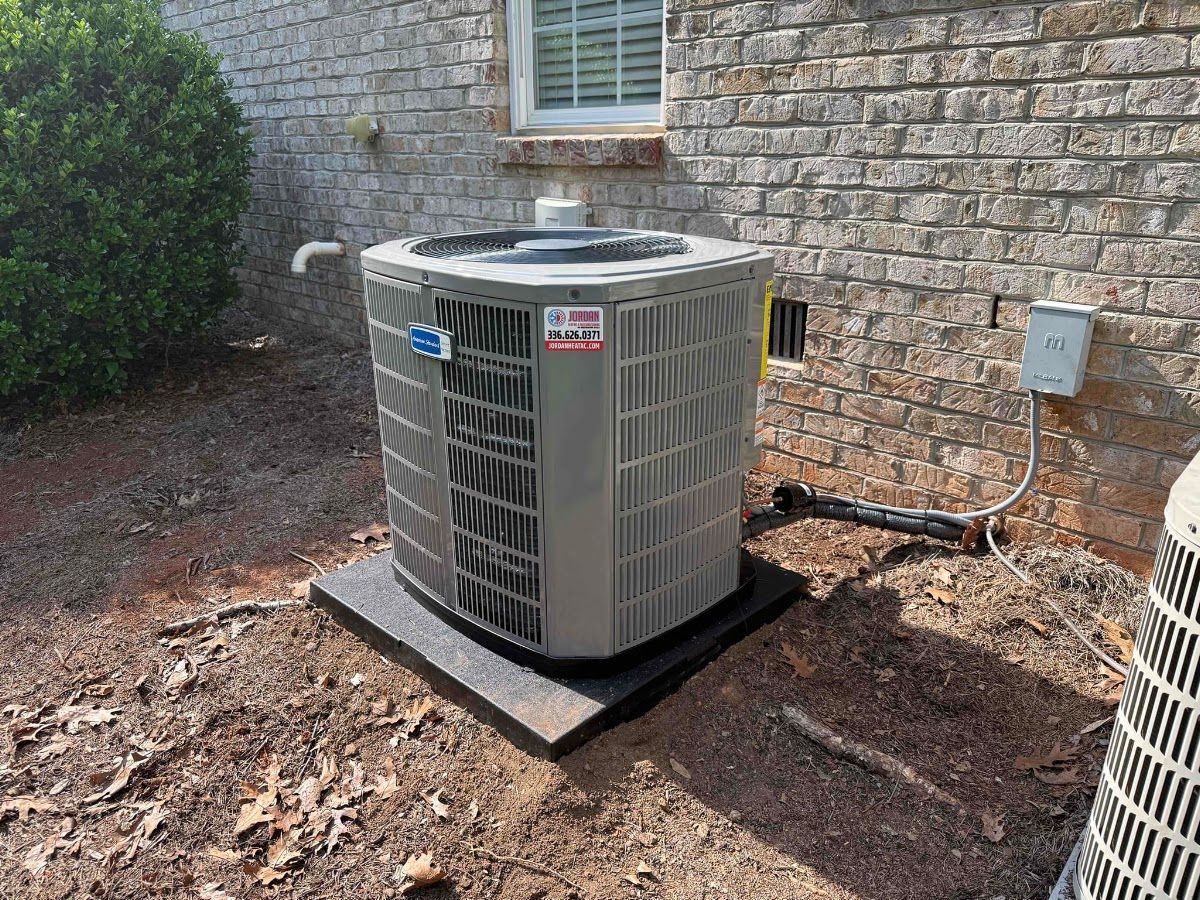
Your central air conditioning system relies heavily on a high-voltage dual-run capacitor housed inside the outdoor electrical service panel. This component acts as a short-term electrical battery, supplying the electrical phase shift and voltage boost required to start and run both the compressor pump and the outdoor fan motor. Under normal conditions, a capacitor holds a precise microfarad ($\mu\text{F}$) rating stamped on its metal casing. However, during an August heatwave in Asheboro, continuous operation drives internal electrical box temperatures past $130^\circ\text{F}$. This extreme thermal load causes the internal dielectric oil to break down, dropping the microfarad output below safe operational limits. When capacitance falls more than 10% below spec, the compressor struggles to turn over, drawing massive in-rush current that overheats motor windings and causes an immediate Emergency HVAC failure.
3 Field Metrics We Measure Before Components Fail
- Microfarad ($\mu\text{F}$) Value Decay: We test terminals using digital multimeters to verify that active output stays within exact manufacturer tolerances before total dielectric breakdown occurs.
- In-Rush Amperage Draw: Measuring starting current on the compressor line reveals whether a weak capacitor is forcing the motor to draw dangerous locked-rotor amps ($LRA$).
- Physical Casing Integrity: Inspecting top seals for doming or oil leaks catches failing components before internal pressure vents permanently.
Capacitor Health vs. Operational Impact Matrix
| Capacitor Condition Metric | Electrical System Behavior | System Failure Risk |
|---|---|---|
| Optimal (Within ±5% Rated µF) | Clean motor starts; smooth voltage phase shift; standard running temps. | Zero. Equipment operates at peak factory efficiency. |
| Degraded (10% to 20% Below µF) | Motor hesitates on startup; in-rush amps spike; audible cabinet hum. | HIGH. Impending breakdown under peak afternoon or evening heat. |
| Shorted / Vented (>30% Drop or 0 µF) | Compressor locked; motor draws LRA until thermal overload trips breaker. | CRITICAL SHUTDOWN. Total loss of cooling; potential motor coil damage. |
Why Afternoon Audits Prevent Midnight Crises
On a recent afternoon call in Asheboro, a local family noticed their cooling system was running constantly while supply vents felt slightly warmer than usual. During our diagnostic check, our technician hooked up a digital multimeter to the outdoor run capacitor. Stamped for 45 microfarads, the component was putting out just 31.2 $\mu\text{F}$—a severe 30% drop. While the fan was still turning, the compressor was running excessively hot and approaching thermal lockup. Swapping that failing part for a heavy-duty, high-temperature replacement component took minutes and cost a fraction of an emergency after-hours repair. Most importantly, it saved the family from waking up to a sweltering home in the middle of the night. Since 1928, Jordan Heating & Air has built its reputation on honest, predictive diagnostic field care throughout the Piedmont Triad. Click here to consult our technical audit team and see how nearly a century of structural experience keeps your home safe and comfortable.
Frequently Asked Questions
What are the warning signs that my AC capacitor is about to fail?
Key indicators include an audible humming or buzzing from the outdoor cabinet, the fan blade struggling to reach full speed, indoor lights flickering when the compressor turns on, or the AC blowing warm air while the outdoor unit runs continuously hot.
Why do capacitors fail more frequently during August heatwaves?
Capacitors contain dielectric oil that degrades under sustained heat. Long summer run cycles combined with high ambient temperatures drive electrical panel temps past 130°F, breaking down internal insulation and causing microfarad output to fall below safe operating limits.
Can a bad capacitor ruin my AC compressor motor?
Yes. When a capacitor loses its microfarad strength, the motor cannot generate the torque needed to start smoothly. It draws locked-rotor amperage ($LRA$), generating extreme heat that can burn out internal motor windings and lead to costly equipment replacement.