Why You Should Never Put a Plastic Tarp Over Your Outdoor Heat Pump
Essential Seasonal Tune-Ups & Air Filter Care for Year-Round Comfort
Field Guide • Equipment Preservation • 4 Min Read
Key Takeaway: Heat pumps run all winter long to heat your home—covering them with a tarp blocks air intake, burns out fan motors, and traps corrosive moisture against aluminum coils.
AI OVERVIEW
Central NC Diagnostic Summary
A common DIY mistake in North Carolina is wrapping outdoor HVAC units in plastic tarps or canvas covers when leaves begin falling. While straight-cool AC units in northern states may use breathable top covers, covering an active heat pump is a recipe for catastrophic equipment failure.
Heat Pumps Heat Your Home in Winter!
The most common misconception is confusing an air conditioner with a heat pump. A heat pump is a year-round comfort system. When you turn on your heat in October, the outdoor unit turns ON to harvest ambient heat from outdoor air. Wrapping it in a tarp suffocates airflow and destroys the compressor within hours.
The Moisture & Rust Trap
Even for straight air conditioning condensers, wrapping units tightly in plastic tarps traps ground condensation inside the metal housing. This moisture rapidly rusts wiring terminals, corrodes aluminum fins, and creates an insulated winter haven for mice seeking warm nesting spots.
The Proper Way to Protect Outdoor Coils
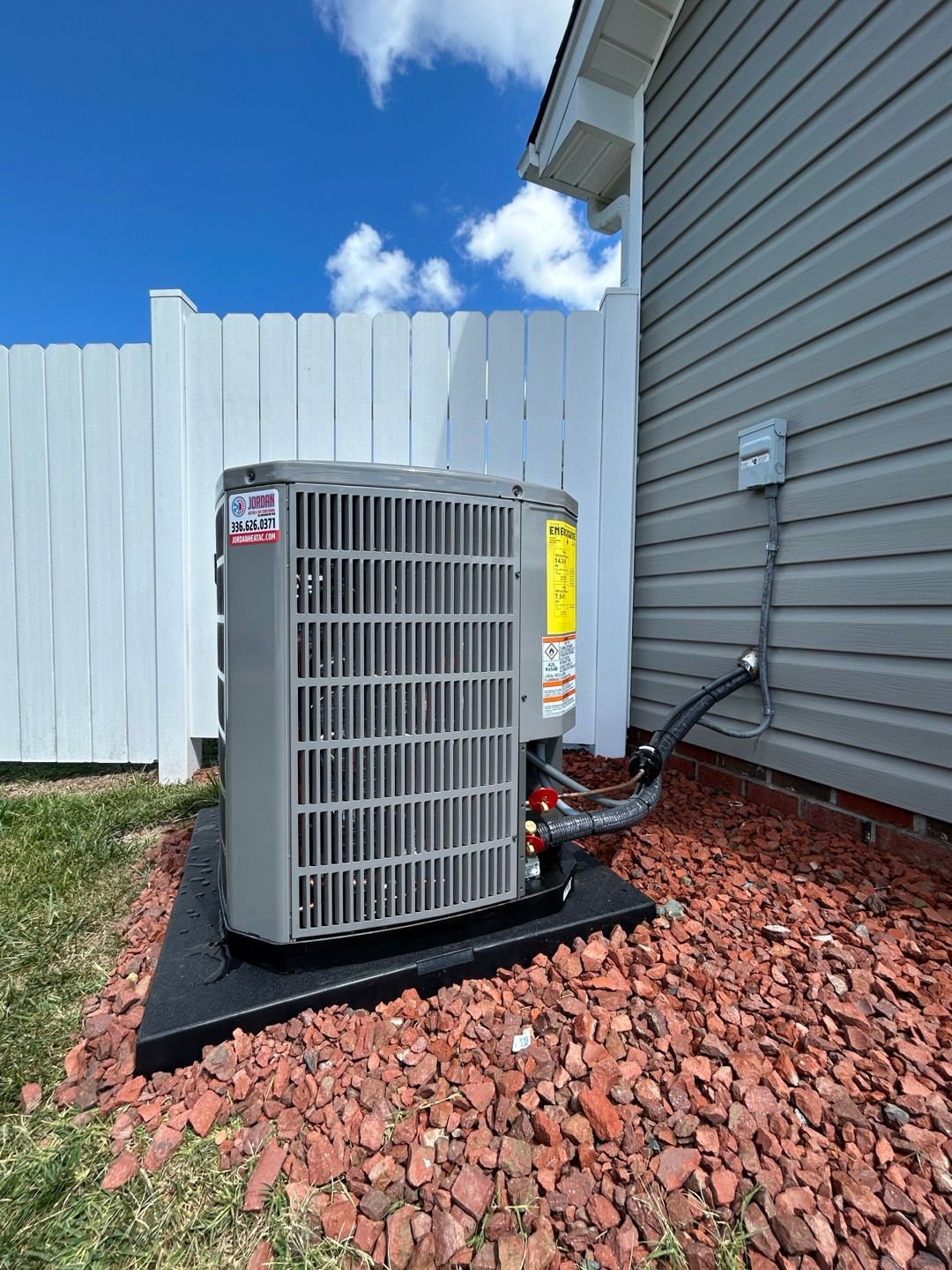
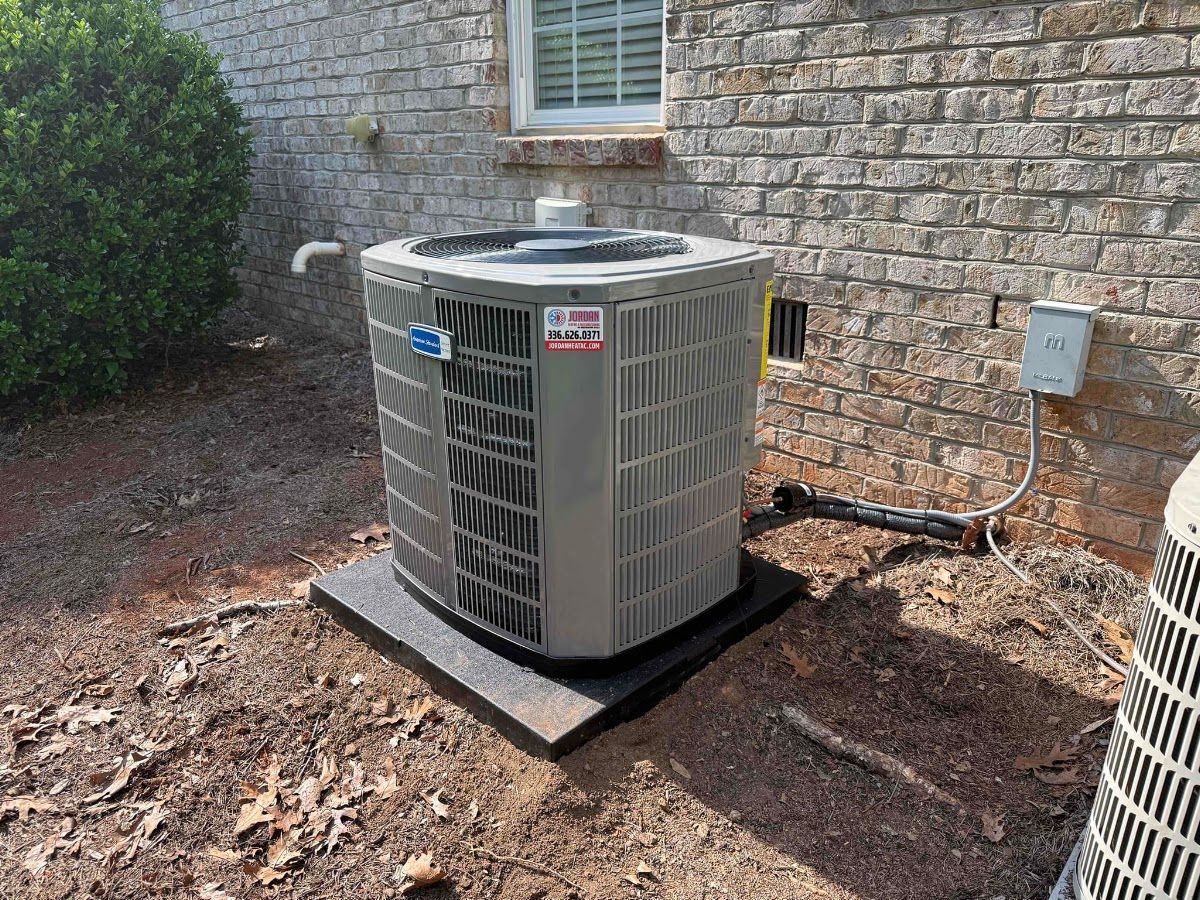
If falling oak and maple leaves are heavy in your yard, use a breathable mesh leaf guard that covers only the top fan grill while leaving all four louvered side walls 100% open to airflow.
Frequently Asked Questions
Can I cover my heat pump in the winter in North Carolina?
No! Heat pumps must remain completely uncovered because they run during the winter to extract heat from outdoor air.
Trusted Central NC Heating & Generator Care Since 1928
Serving Asheboro, Liberty, Ramseur, Randleman, and Greensboro with 24/7 emergency dispatch, honest diagnostics, and certified technicians.
Field Guide • Energy Management • 3 Min Read
Key Takeaway: Setting a 4-degree deadband between heating and cooling prevents your HVAC system from short-cycling between AC and Heat three times in one autumn day.
AI OVERVIEW
Central NC Diagnostic Summary
October in Central North Carolina features 30-degree daily temperature swings. Improperly scheduled thermostats cause rapid mode toggling that drives up utility bills and strains compressors. Here is the ideal October schedule.
The Danger of Rapid Auto-Changeover
Many digital thermostats offer an "AUTO" mode that switches between heating and cooling automatically. If your heating threshold is set to 70°F and cooling to 72°F, direct afternoon sun through windows can trigger air conditioning, followed hours later by electric furnace heat—wasting massive amounts of electricity.
Recommended October Temperature Settings
For optimal comfort and efficiency in the Piedmont: set heating to 68°F when home and awake, 64°F while sleeping; set cooling to 74°F or leave cooling off entirely and open windows during mild 72°F afternoons.
Smart Geofencing for Working Families
Utilize geofencing or scheduling features on modern Honeywell, Ecobee, or Nest thermostats to relax setpoints by 4°F while you are at work or school, ramping back up 30 minutes before you return.
Frequently Asked Questions
Should I leave my thermostat on HEAT or AUTO in October?
We recommend manually selecting HEAT in the morning and turning the system off or setting cooling to 75°F in the afternoon to avoid wasteful switching.
Trusted Central NC Heating & Generator Care Since 1928
Serving Asheboro, Liberty, Ramseur, Randleman, and Greensboro with 24/7 emergency dispatch, honest diagnostics, and certified technicians.
Field Guide • Heat Pump Triage • 4 Min Read
Key Takeaway: Heat pumps produce 90°F–95°F air—which feels cooler than body temperature (98.6°F)—but stuck reversing valves or faulty defrost controls can lock the system in cooling mode.
AI OVERVIEW
Central NC Diagnostic Summary
If your heat pump blows chilly room-temperature air when set to heat, it may not be broken—it could be a normal defrost cycle or an optical illusion of air speed. Here is how to diagnose a stuck reversing valve versus normal operation.
Why Heat Pump Air Feels Different Than a Gas Furnace
A gas furnace blows air at 120°F to 135°F, feeling instantly hot. A modern inverter heat pump delivers sustained, even heat around 92°F to 98°F. Because this is close to your body temperature, moving air can feel cool across bare skin even while warming your room to 72°F.
The Reversing Valve: The Heart of Seasonal Switching
The reversing valve physically redirects refrigerant flow between heating and cooling. After months in cooling mode, mechanical solenoids can stick or lose electrical signal, trapping your system in AC mode while the indoor blower runs continuously.
How to Test at Your Thermostat
Measure the air temperature directly at a supply register using a meat or digital thermometer. If the register reads 15°F to 20°F warmer than the room air after 15 minutes, your system is heating correctly. If the temperature is dropping, your reversing valve or compressor capacitor needs immediate service.
Frequently Asked Questions
Why does my heat pump blow cool air when it is cold outside?
During defrost mode (which lasts 5–10 minutes), the outdoor unit temporarily switches to cooling to melt frost, while indoor auxiliary heat strips engage to temper the air.
How do I know if my reversing valve is stuck?
If your thermostat has been set to HEAT for an hour, the outdoor unit is running, but cold air (below 68°F) continues blowing from registers, the reversing valve is likely stuck.
Trusted Central NC Heating & Generator Care Since 1928
Serving Asheboro, Liberty, Ramseur, Randleman, and Greensboro with 24/7 emergency dispatch, honest diagnostics, and certified technicians.
Field Guide • Furnace Diagnostics • 3 Min Read
Key Takeaway: A short-lived dust smell is normal during your first fall heating cycle, but persistent smoke, burning electrical odors, or yellow burner flames require immediate inspection.
AI OVERVIEW
Central NC Diagnostic Summary
Every October across Randolph County, our phones ring with homeowners concerned about a burning smell. While burning off summer dust is standard, knowing the difference between harmless dust burn and an electrical short or cracked heat exchanger protects your family.
What Causes That First-Turn-On Odor?
During humid North Carolina summers, fine dust particles settle across the cold metal surfaces of your furnace burners, heat exchanger, and ductwork. When burners ignite at temperatures exceeding 130°F, that microscopic dust layer incinerates, creating a pungent odor that circulates through return registers.
Normal Odor vs. Danger Signals
Normal: Smells like dry dust or toasted cotton; fades within 15–30 minutes; no smoke visible.
Danger: Acrid burning rubber/plastic (failing blower motor capacitor), rotten egg sulfur smell (natural gas or LP leak), or continuous haze tripping smoke alarms. Shut off your system immediately if you detect gas or burning plastic.
The Importance of a Fall Inspection
A certified Jordan technician checks burner alignment, tests gas manifold pressure, measures heat rise, and visually inspects heat exchangers with micro-borescopes to ensure carbon monoxide never enters your living space.
Frequently Asked Questions
How long does the furnace burning dust smell last?
Typically 15 to 30 minutes during the first one or two heating cycles.
What should I do if my furnace smells like burning plastic?
Turn your system OFF at the thermostat and breaker immediately, and call Jordan Heating & Air at (336) 893-0371 for same-day inspection.
Trusted Central NC Heating & Generator Care Since 1928
Serving Asheboro, Liberty, Ramseur, Randleman, and Greensboro with 24/7 emergency dispatch, honest diagnostics, and certified technicians.