Humidity vs. Comfort: Preparing for the Central NC Spring Dampness

By Jordan Heating and Air
Serving Central North Carolina Since 1928
TL;DR ESTIMATED READING TIME: 3 MIN
High spring humidity in the Triad forces your HVAC system to work harder, leading to higher bills and potential biological growth. This guide explains how to identify moisture issues early and why professional HVAC service in Central North Carolina is the best defense against the "spring damp" season.
The Cost of High Humidity in the Piedmont
In Central North Carolina, the transition from winter to spring often brings a surge in outdoor moisture that makes your home feel heavy and sticky. When your indoor humidity levels climb above 50 percent, your air conditioner must spend more energy removing water from the air than actually cooling the space, which leads to unnecessary wear and higher utility costs. You can prevent this strain by scheduling a professional inspection to ensure your AC replacement or current unit is properly sized and charged for the upcoming season. Recent weather patterns have shown that early moisture spikes can lead to system freezing or drainage issues if not addressed.
Common Signs of Spring Moisture Stress
- Sticky or "heavy" air: Feeling like the thermostat setting is never low enough to provide comfort.
- Musty odors: Smells coming from vents that indicate moisture trapped in the evaporator coil or drain pan.
- Condensation on windows: Visible water droplets on glass or metal frames during humid mornings.
- Biological growth: Early signs of mildew on bathroom or basement surfaces.
- Longer cycle times: Your AC runs for 30+ minutes at a time without reaching the target temperature.
Spring Humidity Decision Aid
| System Factor | Your Current Situation | What That Usually Means |
|---|---|---|
| Air Feel | Air feels damp or sticky at 72 degrees | The system is failing to dehumidify effectively. |
| Smell | Faint musty odor when the fan starts | Biological growth may be present on the indoor coil. |
| Thermostat | Humidity reading stays above 55% | You likely need whole-home dehumidification support. |
Balancing Efficiency and Comfort
Managing humidity is not just about comfort; it is a choice between proactive maintenance and the risk of premature system failure. A standard air conditioner is designed to remove moisture, but during a Central NC spring, the "latent load" (the moisture in the air) often exceeds what a single unit can handle without running constantly.
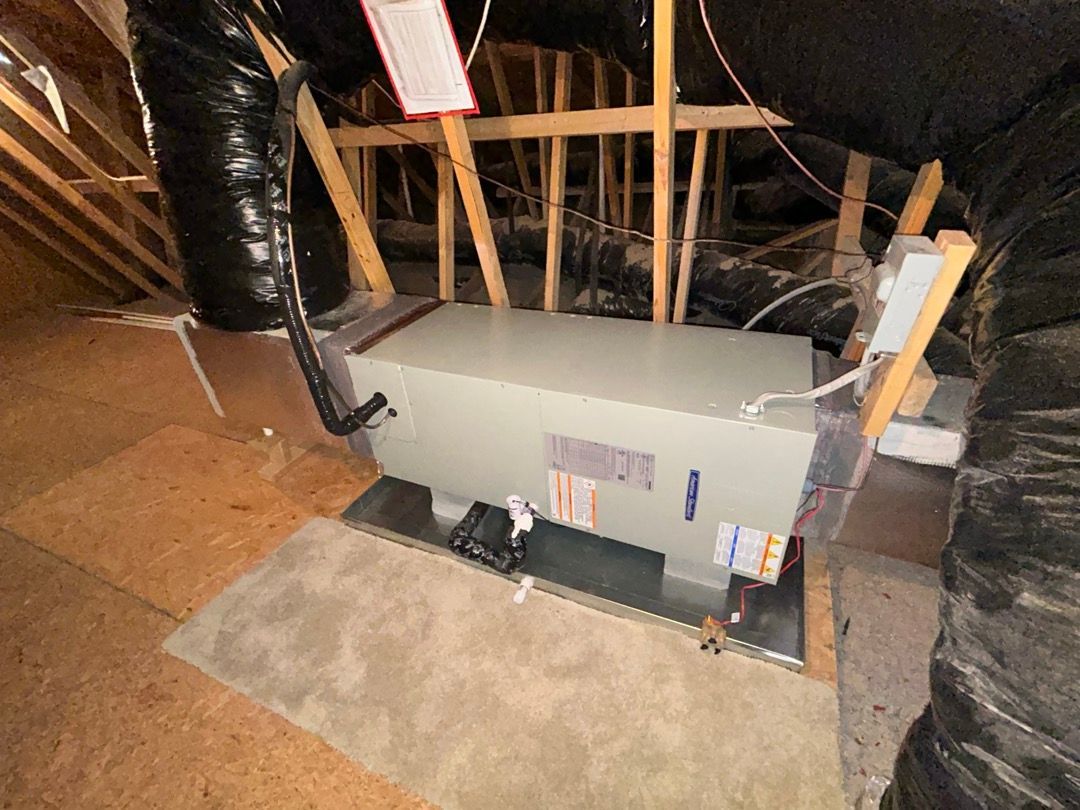
To visualize how your home stays dry, imagine the airflow path: humid return air is pulled across a cold evaporator coil. The temperature drop causes water to condense into a drain pan while the dry air is pushed back into your living space. If your drainage system is clogged from winter debris or the coil is dirty, this process fails. Investing in whole home dehumidification allows your system to focus on temperature while a dedicated unit handles the water, significantly extending the life of your primary HVAC equipment.
Frequently Asked Questions
What is the ideal indoor humidity level for a Central North Carolina home?
The ideal indoor humidity level for an Asheboro home is between 30 and 50 percent. Maintaining this range prevents the growth of mold and dust mites while ensuring your HVAC system operates at peak efficiency. If your home consistently stays above 55 percent, your air conditioner will experience significantly more wear.
Does a new HVAC system help with spring humidity?
A modern, high-efficiency HVAC system provides superior humidity control for Central North Carolina homeowners compared to older units. Newer systems often feature variable-speed blowers that run longer at lower speeds, allowing for more consistent moisture removal. This prevents the "cllamy" feeling often associated with older, single-stage air conditioners.
Can a dirty air filter cause high humidity?
Yes, a dirty or clogged air filter restricts the airflow needed for proper dehumidification in your Central North Carolina home. When air cannot move freely across the evaporator coil, the system cannot effectively remove moisture. Regular filter changes are the simplest way to support your system's ability to keep your indoor air dry and comfortable.
Controlling the dampness of a North Carolina spring doesn't have to be a guessing game. By focusing on your system's ability to breathe and drain, you protect your home’s air quality and your wallet.
Sincerely,
Jordan Heating and Air Conditioning
Committed to Honesty & Quality