Emergency HVAC: Why Lower Thermostat Settings Don't Cool Faster
Binary Speed Fallacies: Why Setting Your Thermostat to 60°F Triggers AC Failures
By Jordan Heating and Air | Serving Central North Carolina Since 1928
SUBJECT: Fixed Delta-T Physics, Evaporator Icing Mechanics & Head Pressure Safety
LOG DATE: 2026-08-04
Cranking your thermostat down to 60 degrees on a 95-degree August afternoon does not force your system to blow colder air or cool your home any faster. It simply forces your air conditioner to run without stopping, risking catastrophic coil icing and motor failure.
Central air conditioning systems operate as fixed-rate heat exchangers, dropping return air temperatures by a steady 16°F to 20°F regardless of how low you set the wall control. Pushing setpoints far below outdoor ambient temperatures causes continuous compressor strain, frozen evaporator coils, and sudden system shutdowns. Explore our step-by-step Troubleshooting Tips for summer cooling loops, or access our 24/7 Emergency HVAC dispatch guidelines if your system has iced over.
The Thermodynamics of Fixed Heat Exchange
A common misconception in residential cooling is treating a wall thermostat like an accelerator pedal in an automobile. Homeowners often assume that dropping the setpoint to $60^\circ\text{F}$ forces the equipment to work harder and discharge lower supply air temperatures. In reality, a standard residential cooling loop functions as an on/off binary mechanical engine. When activated, the compressor and indoor fan run at fixed, engineered speeds, pulling heat out of indoor air at a constant rate. Under normal operational parameters, a properly calibrated system achieves a return-to-supply temperature drop ($\Delta T$) of $16^\circ\text{F}$ to $20^\circ\text{F}$. If ambient indoor air enters return grills at $78^\circ\text{F}$, supply registers will discharge air at approximately $58^\circ\text{F}$ to $60^\circ\text{F}$—whether the thermostat is set to $72^\circ\text{F}$ or $50^\circ\text{F}$. Setting unreasonable target temperatures simply prevents the system from cycling off, leading to rapid component wear and requiring urgent Emergency HVAC intervention.
3 Destructive Cascades Caused by Ultra-Low Setpoints
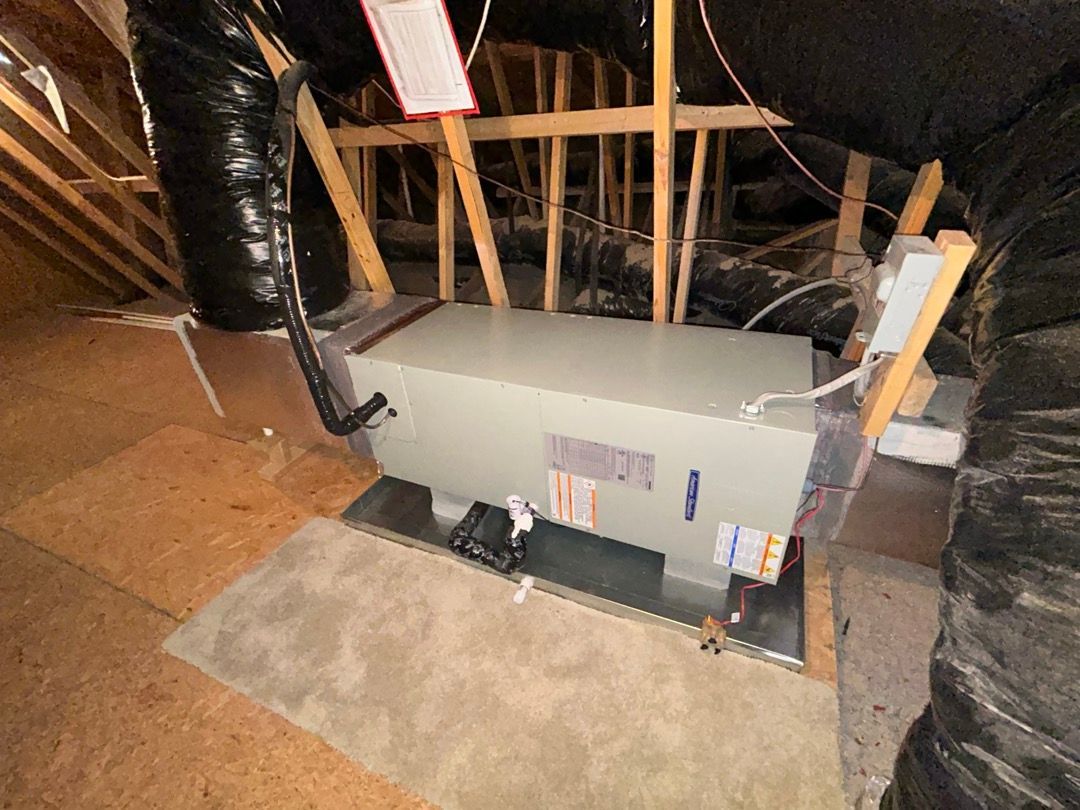
- Continuous Evaporator Coil Freezing: Running non-stop under heavy humidity causes the refrigerant temperature inside the indoor A-frame coil to drop below $32^\circ\text{F}$, turning moisture into a solid block of ice that chokes off system airflow.
- Liquid Refrigerant Floodback: When an evaporator coil freezes solid, liquid refrigerant cannot absorb household heat to boil into a gas. This raw liquid floods back down the suction line and damages internal compressor pistons.
- Compressor Motor Thermal Overload: Pushing a system to run continuously during extreme afternoon heat spikes head pressure, tripping thermal safety switches and leaving your home completely without cooling.
Thermostat Setpoint Operational Impact Scale
| Target Setpoint Strategy | System Operational Behavior | Mechanical Risk Profile |
|---|---|---|
| Balanced Target (72°F – 75°F) | System cycles naturally; maintains optimal humidity removal and steady $18^\circ\text{F}$ supply temperature drop. | Low. Equipment operates within engineered thermal limits; extends compressor life. |
| Extreme Drop (60°F – 65°F) | Compressor runs non-stop; fails to reach target temperature as house absorbs heat faster than AC can extract it. | CRITICAL. High risk of frozen evaporator coils, liquid slugging, and motor burnout. |
The 20-Degree Thermal Limit Benchmark
To keep your cooling equipment running reliably through late-summer heatwaves, you must align your expectations with structural physics. On days when outdoor temperatures cross $95^\circ\text{F}$ in Liberty, a properly sized residential system is engineered to maintain indoor temperatures around $75^\circ\text{F}$—representing a safe $20^\circ\text{F}$ design gap. Demanding a $35^\circ\text{F}$ difference forces your outdoor unit past its performance limits. If your system runs continuously without lowering indoor temperatures or if you notice ice forming on outdoor copper lines, turn the system off immediately at the breaker to prevent compressor damage. Since 1928, Jordan Heating & Air has delivered honest, data-driven mechanical diagnostics throughout the Piedmont Triad. We evaluate your system's airflow, verify static pressure balance, and check refrigerant levels without pushing unnecessary equipment replacements. Click here to consult our local technical team and see how nearly a century of local expertise protects your home's comfort.
Frequently Asked Questions
Does setting my thermostat to 60°F cool my house down faster?
No. Air conditioners extract heat at a fixed rate regardless of thermostat settings. Lowering the setpoint to 60°F does not make the discharge air any colder; it simply commands the system to run indefinitely, increasing electrical bills and risking severe mechanical damage.
Why does setting the thermostat too low cause the indoor AC coil to freeze?
When a system runs continuously under high heat loads and low setpoints, indoor coil temperatures can drop below 32°F. Humidity pulling across the metal fins freezes on contact, building up a solid block of ice that blocks airflow and can cause liquid refrigerant to flood back into the compressor.
What is the maximum realistic temperature difference my AC can maintain in summer?
Standard residential air conditioners are engineered to maintain a maximum temperature difference of 18°F to 20°F between outdoor ambient air and indoor living spaces. Expecting a system to maintain 65°F indoors when outdoor temperatures hit 98°F exceeds standard residential cooling capacities.