Air Conditioning Installation: Clean Unit Setup in Asheboro
The Foundation of Cooling: Why Level Pads Dictate Compressor Lifespan
By Jordan Heating and Air | Serving Central North Carolina Since 1928
SUBJECT: Structural Leveling, Nitrogen Purging & Terminal Torque Specs
LOG DATE: 2026-07-08
A premium Trane compressor is only as good as the foundation it sits on. If your installer cuts corners on the earthwork or rushes the electrical terminations, you are turning a $10,000 asset into a ticking mechanical clock.
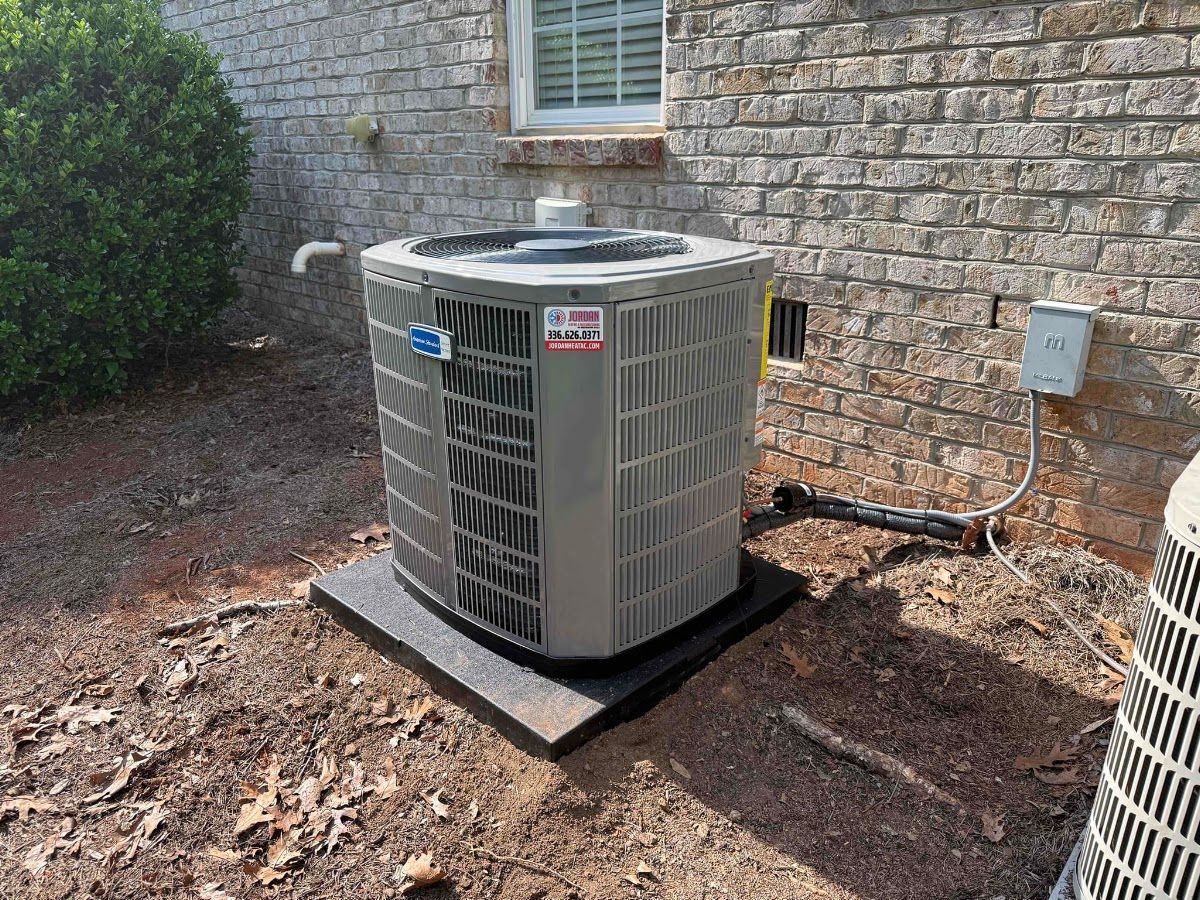
An outdoor condensing unit requires strict adherence to structural leveling and vibration-isolation protocols to prevent early mechanical failures. Throwing a unit onto unexcavated soil invites uneven settling, oil separation, and bearing lockups. Our technicians ensure every step matches strict factory standards. Learn more about our comprehensive Air Conditioning Installation protocols or book an on-site system swap consultation today.
The Mechanics of a Level Foundation
When an outdoor AC unit sits unevenly, it triggers a destructive chain reaction inside the sealed cooling loop. The internal compressor pump relies on a continuous bath of specialized oil pooled at the bottom of its crankcase. If the structural pad tilts over time due to shifting red clay soil, that oil moves away from the center pump intake. This leaves the top motor bearings dry, generating extreme friction and driving up amperage draw until the windings melt. That is why our installation process begins with deep earth excavation. We lay a compressed, high-density gravel base covered by a steel-reinforced composite pad. This layout stays perfectly level across years of seasonal rain, keeping the mechanical weights balanced and running quietly. If your old outdoor unit is sinking into the dirt, click here to schedule a comprehensive system replacement evaluation before terminal damage leaves you stranded in the heat.
3 Installation Details That Safeguard Your System
- Oxidation-Free Nitrogen Purging: While welding copper lines, we flood the tubes with dry nitrogen gas. This completely blocks oxygen, preventing black carbon soot from forming inside the line and clogging your micro-channels.
- Liquid-Tight Conduit Encapsulation: We run high-voltage lines through flexible, weatherproof conduits, shielding vulnerable copper wiring from yard equipment impacts and nesting pests.
- Calibrated Terminal Torquing: Every electrical lug inside the contactor panel is tightened to exact inch-pound specifications, preventing loose wire joints that heat up and burn out control boards.
Outdoor Unit Workmanship Audit Checklist
| Installation Element | The 'Cut Corners' Method | The Jordan Engineering Standard |
|---|---|---|
| Ground Foundation | Plastic pad dropped directly on top of loose yard turf. | Excavated ground bed with high-density gravel base packing. |
| Refrigerant Lines | Brazed with open oxygen; line left unwashed. | Continuous nitrogen purge followed by a deep vacuum below 500 microns. |
| Control Wiring | Exposed low-voltage wires wrapped loosely around insulation tape. | Full liquid-tight conduit armor with matching color wraps. |
The Invisible Destruction of Oxidized Brazing
Many installation errors stay completely hidden from view inside the copper tubing. When copper is heated to 1,200 degrees without a protective nitrogen shield, oxygen burns the interior metal walls, creating thick carbon flakes. The moment the new compressor kicks on, it flushes this abrasive soot directly into the internal fluid stream. This chokes down small expansion valve screens, spikes system running temperatures, and causes premature compressor burnout within five years. For 98 years, Jordan Heating & Air has rejected these hasty installation tactics. We build setups engineered for the realities of the Piedmont Triad, backing every brazed joint with personal accountability. Protect your comfort by picking the team that builds your system to last. Take a moment to browse our premium new AC systems catalog and see the value proper installation details bring to your investment.
Frequently Asked Questions
Why does an outdoor AC unit need to be perfectly level?
Your cooling unit’s compressor pump depends on an internal lubricating oil pool. If the exterior pad tilts due to uncompacted dirt or soft soil, oil drifts away from the center suction tube, starving critical upper bearings of lubrication and causing the motor to lock up early.
What is a nitrogen purge, and why is it critical during line brazing?
When connecting copper lines with high-temperature torches, open air creates thick carbon scaling inside the line. Flooding the line with dry nitrogen gas displaces this oxygen entirely, keeping the interior pristine and free of flakes that can clog expansion valve ports.
How long should a standard residential outdoor AC installation take?
A textbook changeout requires 4 to 8 hours of on-site technical labor. This covers foundation digging, sub-panel upgrades, deep line dehydration using professional micron gauges, and active refrigerant balancing to verify factory performance.